Introduction
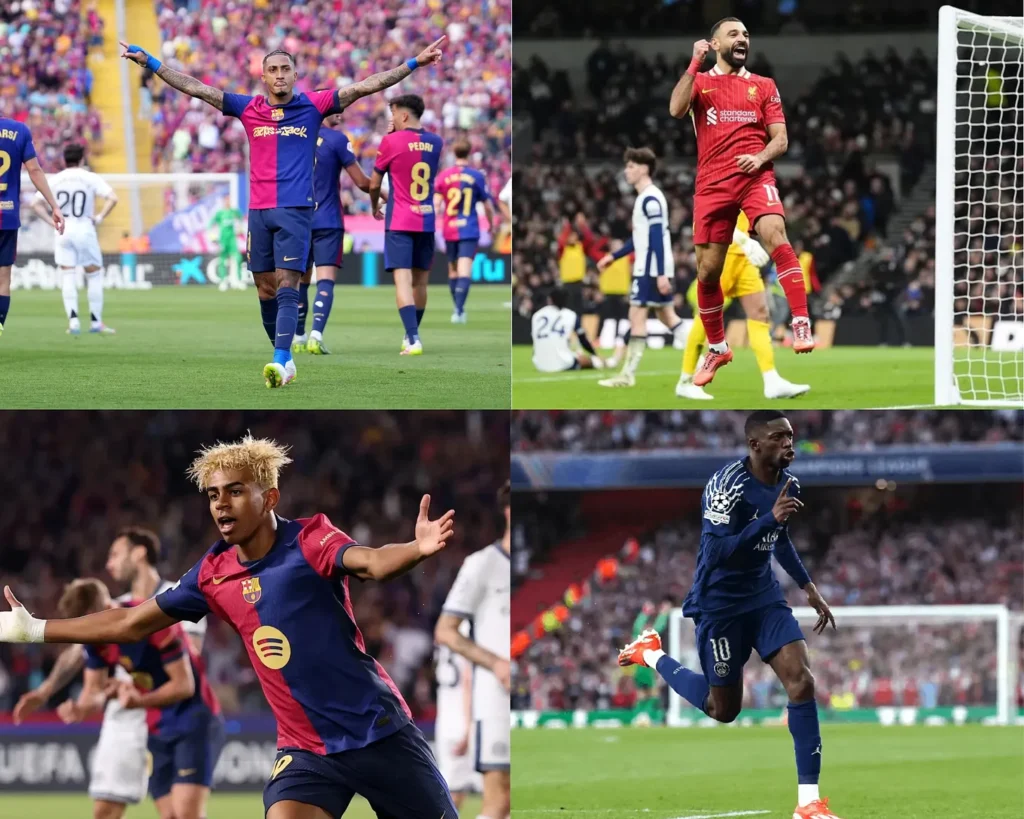
The 2025 Ballon d’Or ceremony took place on September 22nd in Paris and ended with Ousmane Dembele hoisting the iconic golden all above his head, as the best male football player during the 2024/25 season. According to bookmakers, Raphinha, Lamine Yamal, Mohamed Salah and Ousmane Dembele were the top contenders. UEFA advises journalist voting on the Ballon d’Or to base their ranking on the criteria below:
- Individual performances, decisiveness, and impressive character
- Team performances and achievements
- Class and fair play
Before unravelling how each player conducted themselves, here is a brief overview of each criterion:
- Individual performance refers to a player’s personal contributions, including statistics such as goals, assists, overall impact on games, and consistency.
- Decisiveness points to the player’s ability to perform in crucial moments that change match outcomes, such as scoring important goals or making game-winning plays.
- Impressive Character relates to demeanour, leadership qualities, influence on the team, and conduct on and off the pitch, demonstrating traits that inspire teammates and fans.
- Team performance and achievements measure how much the player contributed to their team’s success in winning trophies or important matches at club or national level
- Class reflects the player’s skill level, elegance, technique, creativity, and intelligence on the ball.
- Fair play refers to ethical behavior, respect for opponents and referees, and avoidance of unsportsmanlike conduct; this also considers the player’s public image off the pitch – noting Raphinha and Dembele had disciplinary issues.
How did they perform domestically?
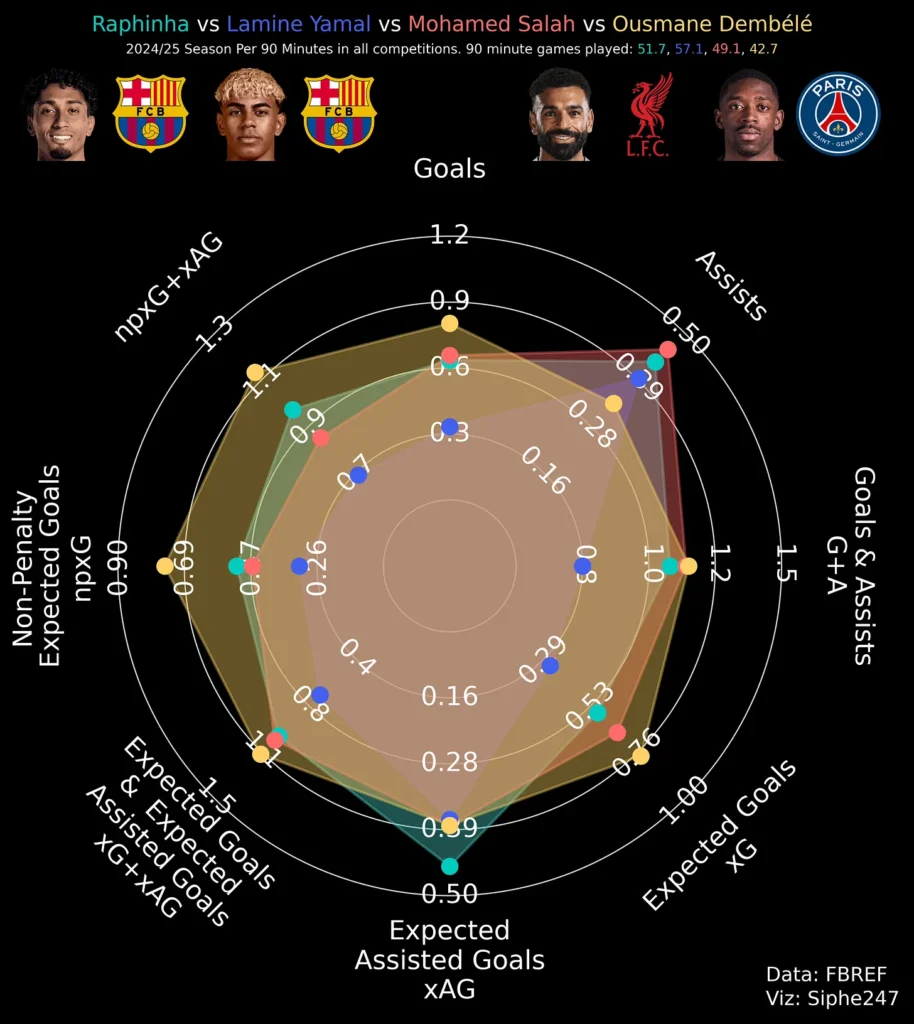
Across domestic play, Ousmane Dembele sat at the top of the leaderboard in six of eight per-90 metrics, with his biggest edges in non-penalty xG and xAG. In plain terms, non-penalty xG strips out penalties to estimate how many goals a player’s open-shots should yield, while xAG captures the quality of chances a player sets up for teammates. This is highlighted in the wheel chart below:
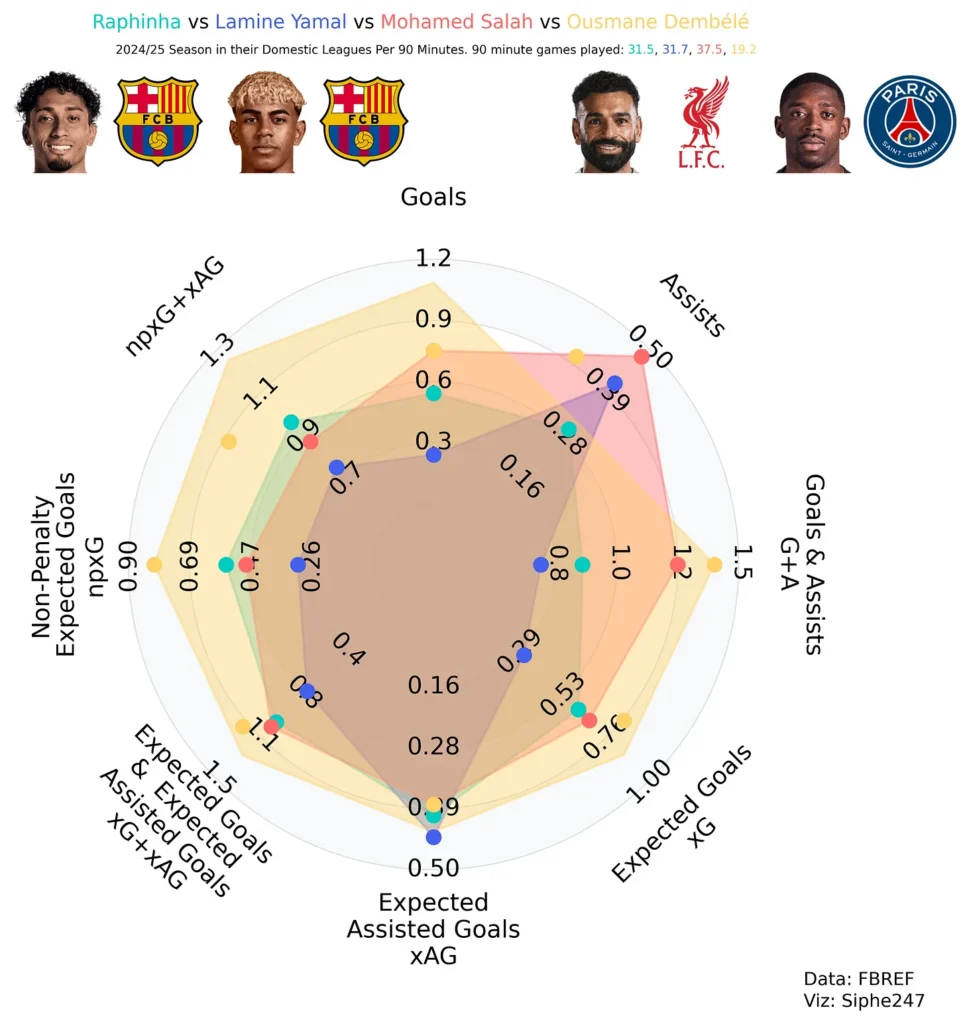
In raw scoring output, Dembele was a machine, his 1.09 goals per 90 was nearly 0.3 clear of the field, and he still finished second overall despite 21 league goals across 29 starts – finding the net in roughly 72% of them. As a quick sense-check, projecting 1.09 G/90 over 20 starts lands at around 21.8 goals, about half a goal above his actual return. Paired with an xG of 0.86 per 90, that gap points to high-end finishing rather than simple shot volume.
On the supply side, Mohamed Salah led the pack for consistency. He registered an assist in 48% of his appearances, comfortably ahead of Lamine Yamal at 41%. He was also the only player whose actual assists outpaced expected assists per 90 (0.38), finishing with 18 in the league and the Playmaker of the Season award to show for it.
As a creator, Yamal narrowly shaded Dembele on xGA, 0.44 to 0.43 per 90, i.e. his passing and chance quality were expected to yield just under half a goal each full match. It’s a small edge, but it underscores Yamal’s growing influence as a primary chance creator.
How did they perform in other competitions?
Widen the lens to continental and international competitions. Dembele still comes out on top in six of eight per-90 metrics. His non-penalty xG sits at a hefty 0.75, with Raphinha next at 0.52. The Brazilian, though, sets the table better than anyone here his xAG leads the group at 0.57 and he finished joint-second for total assists (22) across competitions, underlying his creative weight for both Brazil and Barcelona.
Numbers move the conversation forward, but they don’t tell the whole story. They miss the feel of a title-deciding strike, the weight of a moment, the craft that doesn’t show up on a spreadsheet, precisely the stuff voters consider for the Ballon d’Or. To balance the data, we are pairing the analysis with match compilations where each Ballon d’Or contender was named FotMob’s Player of the Match.
As economist Aaron Levenstein famously said “Statistics are like Bikini: what they reveal is suggestive but what they conceal is vital”. So the Ballon d’Or shouldn’t be a box-score election, this is why we believe Raphinha deserved the award.
Sign Up For Our Mailing List
Players Spotlight
Raphinha
The 2024/25 season felt like a defining chapter for Barcelona’s spearhead, Raphinha. By the Ballon d’Or first two pillars – individual performance and team success – he didn’t just keep pace; he set it. On form and impact, he was to us, the standout candidate, a player whose numbers and big-game moments pulled matches and trophies his way.
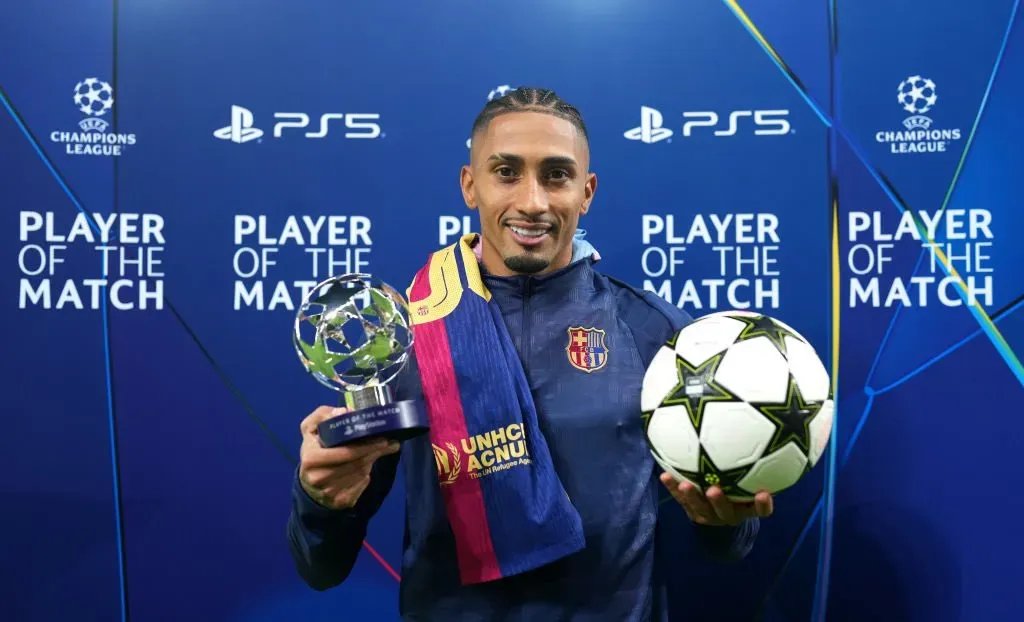
Raphinha’s season was historic by any standard 38 goals and 24 assists across club and country. The best haul of any contender. Yet he landed a contentious fifth in the Ballon d’Or voting, a result that felt out of step with his impact.
By UEFA’s three pillars above, his resume is loaded. He captained Barcelona 19 times and shouldered the load during a rough stretch without Marc-Andre ter Stegen and Ronald Araujo. Ter Stegen’s setback came in the 5-1 loss to Villarreal, in which Raphinha still won man of the match. Araujo was sidelined after Uruguay’s scoreless Copa America draw with Brazil. In that window, Raphinha caught fire with 14 goals in 18 games.
On the biggest stages, he was just as sharp. He finished joint top scorer and top provider in the Championship League, headlined by a hat-trick against Bayern Munich. He won La Liga player of the season, and helped power a domestic treble. Internationally, he kept the meter running for Brazil too, scoring four in seven World Cup qualifiers. All told, it was a season of leadership, production, and clutch moments. We feel the exact profile the award is meant to recognise.
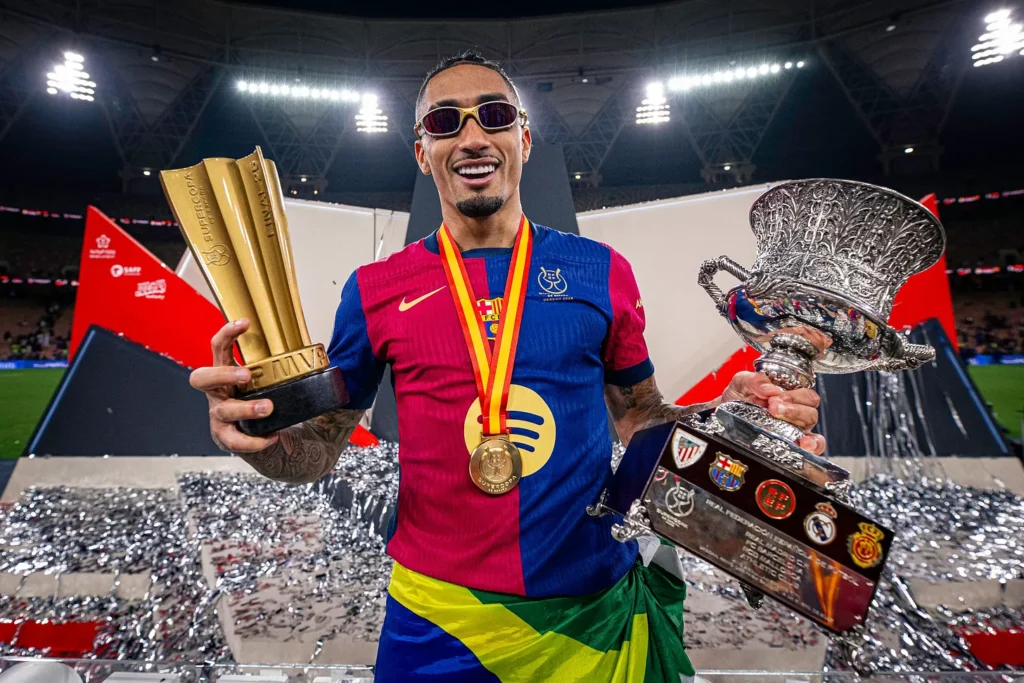
Taken on their own, these milestones already separate Raphinha from the pack. Week after week he paired leadership with end-product, making a compelling case for the sport’s top individual honour. In matches where he wore the armband for Barcelona, he earned Player of the Match six times. Twice in the Champions League, three times in the La Liga, and once in the Spanish Super Cup Final against Real Madrid, where he delivered a brace and an assist.
Lamine Yamal
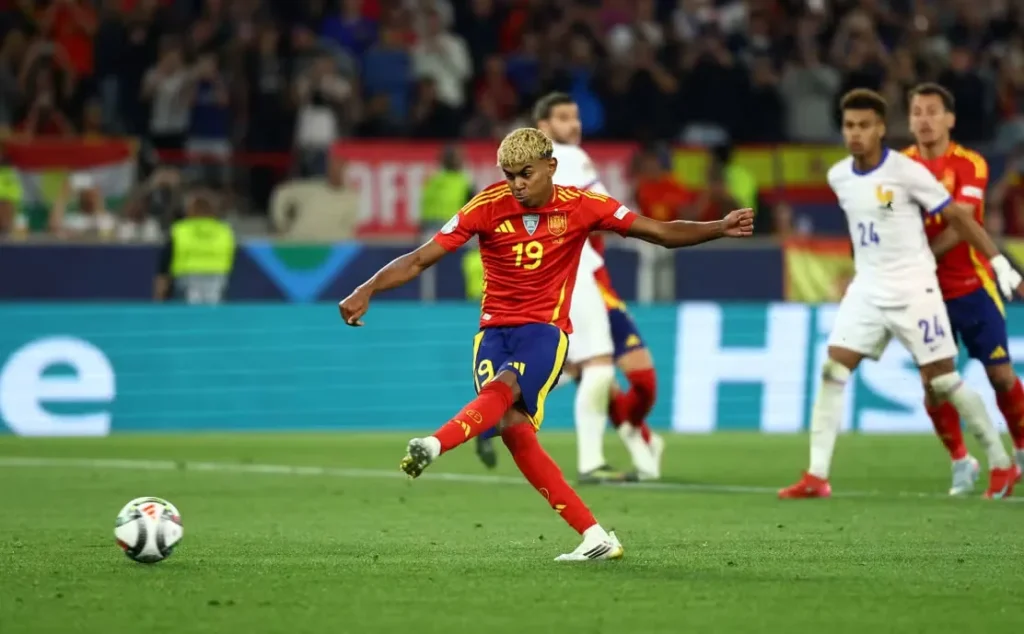
Lamine Yamal’s 2024/25 was a breakout in every sense. As a first-team regular for the first time, he didn’t just hold his own, he lit matches up posting 9 goals, and 13 assists in 35 La Liga games. For a teenager, the mix of invention, composure, and end product stood out week after week.
The impact travelled well beyond Spain. In the Champions League he added 5 goals and 3 assists in 13 appearances, showing he can tilt elite fixtures too. He wasn’t wearing the armband, but his presence and decision-making consistently jump-started Barca’s attack, numbers and eye test in rare agreement.
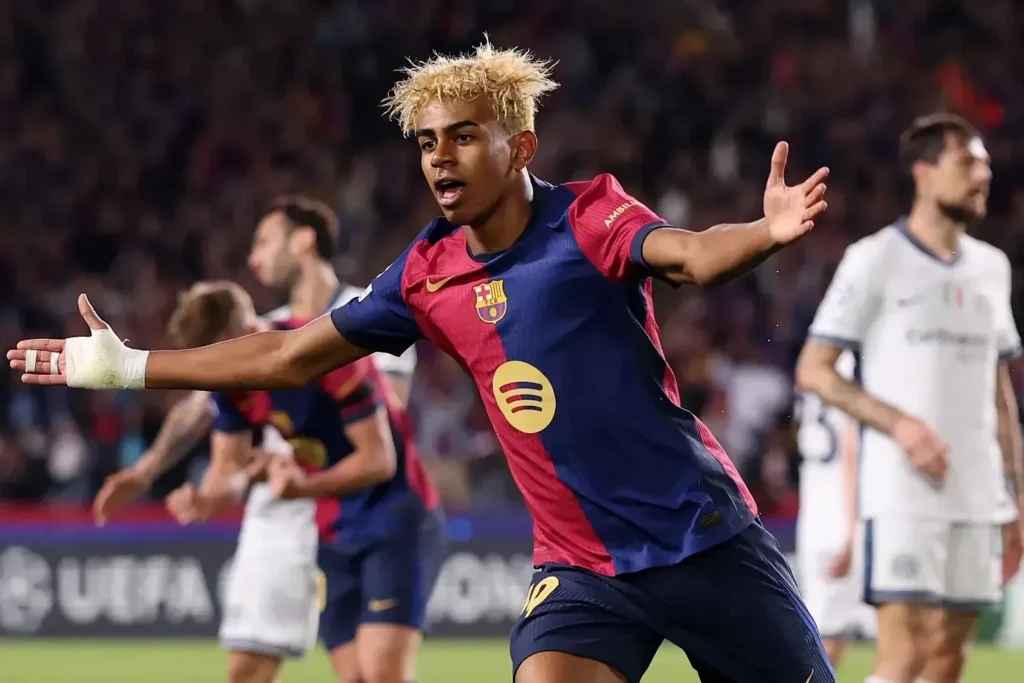
Yamal’s game – silky technique, incisive passing, and clever off-ball movement – put him at the center of Barcelona’s surge at home and in Europe. He kept changing matches with chance creation and end product, and by season’s end had won over teammates, coaches, and supporters as a genuine prodigy with a sky-high ceiling.
The signature moment of his ascent came in the UEFA Nations League semi against France. A breathless 5-4 shootout where he struck twice and took Player of the Match, all with a calm far beyond his years. Spain fell short in the final to Portugal, but across the tournament he looked every bit an emerging star on the international stage.
Mohamed Salah
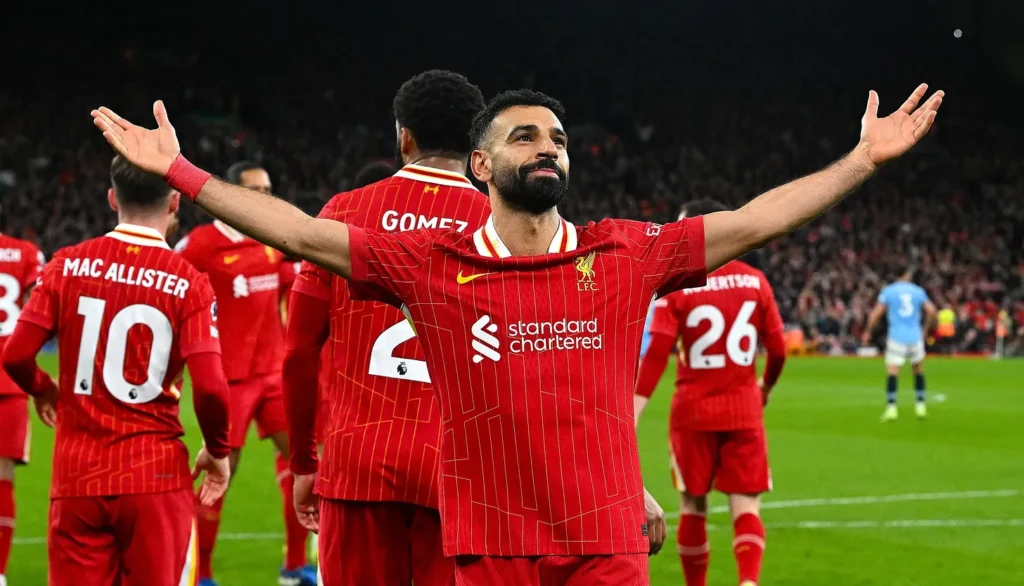
Mohamed Salah’s 2024/25 was vintage greatness. Across 38 league games he stacked 29 goals and 18 assists – 47 goal involvements – tying the single season record for a 38 game Premier League campaign. That mark sits alongside Alan Shearer and Andy Cole’s best hauls, achieved in a 42-game era, which only sharpens the context. It’s the biggest combined goals + assists total England has seen since 1995/96, another line on a resume that already reads like an all-timer.
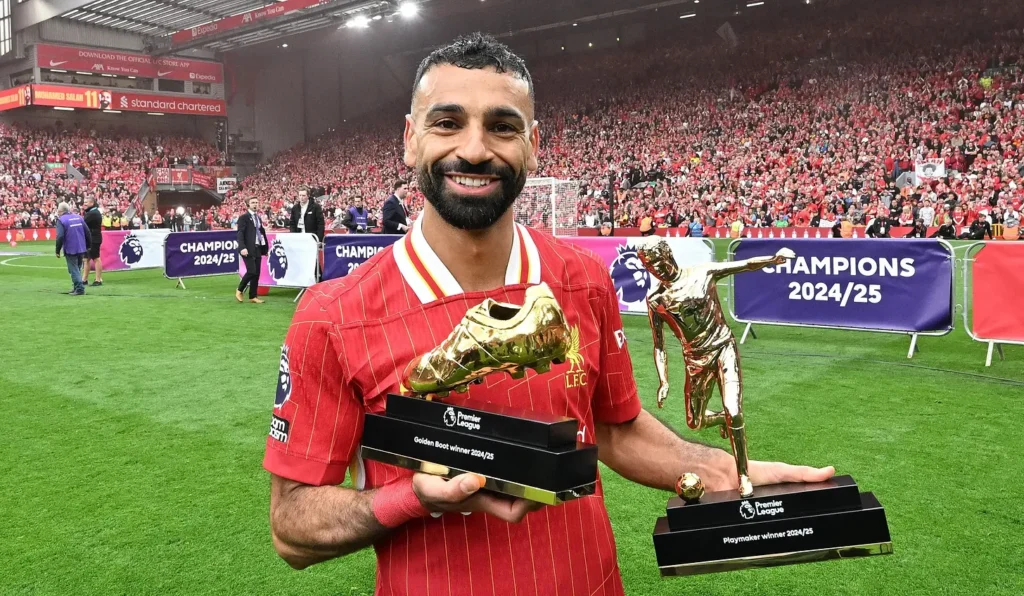
Salah carved his name into Premier League history, becoming the first player to sweep Player of the Season, Playmaker of the Season, and the Golden Boot in a single campaign. He wasn’t just ruthless, matching joint records with 16 league goals and 11 assists away from home.
That output powered Liverpool’s title win, with Salah the clear standout across the marathon. Europe was a different story, as Liverpool bowed out in the Champions League last-16 to eventual winners Paris Saint-Germain.
Domestically, he didn’t feature in the FA Cup, where Liverpool crashed out in the fourth round to Plymouth Argyle. In the Carabao Cup he chipped in two goals and an assist, but failed to make an impact in the final, a 2-1 defeat to Newcastle United.
Ousmane Dembele
Ousmane Dembele’s 2024/25 was the season PSG had always dreamed of and he was central to it. He helped drive a historic treble, lifting Ligue 1, the Coupe de France, and at last the club’s first Champions League. The arc wasn’t linear, after a disciplinary run in with Luis Enrique in early autumn, he recalibrated and caught fire from December. The switch flipped on December 18 against Monaco, where he announced his return with a Ligue 1 brace.
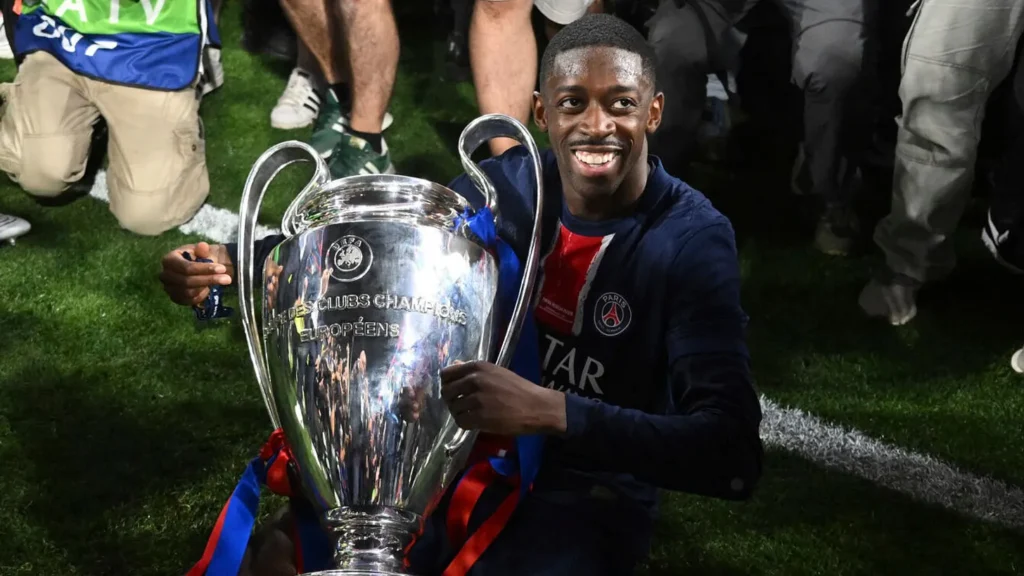
Dembele’s year came with marquee moments, back-to-back hat tricks. Stuttgart in the Champions League, then Brest in Ligue 1. By season’s end he’d stacked 37 goals and 15 assists in all competitions, fusing chance creation with ruthless finishing to emerge as PSG’s primary attacking engine.
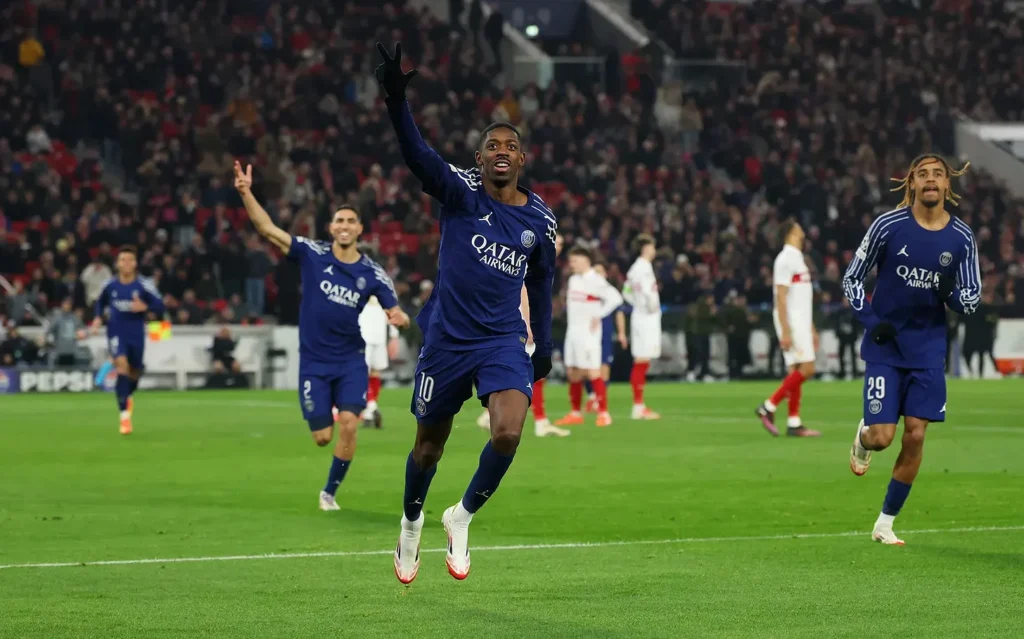
Dembele’s season echoed across Europe. He took home Champions League Player of the Season, Ligue 1 Player of the Year, and shared the Ligue 1 Golden Boot with Mason Greenwood – edging the tie on fewer penalties. Time and again he delivered when stakes were highest, anchoring PSG’s surge both domestically and in Europe.
The one that got away was the Club World Cup. Chelsea controlled the final at MetLife, winning 3-0, with Cole Palmer bagging a brace and setting up Joao Perdo. Even with Dembele driving, PSG couldn’t complete the clean sweep.
In Closing
The 2024/25 season delivered a vintage crop of Ballon d’Or cases. For us, Raphinha sits at the top, not just on output, but in leadership, clutch moments, and the way he steered Barcelona through a historic year. The blend of end product and captaincy separated him.
Close behind is Ousmane Dembele whose midseason surge powered PSG’s treble.Those back-to-back hat-tricks and the personal silverware speak to a campaign defined by big moments and bigger resilience.
Mohamed Salah’s Premier League run was record-chasing and relentlessly consistent, worthy of a strong third. Lamine Yamal’s breakout hinted at a generational arc just getting started, with the promise of even higher gears to come.
Sign Up For Our Mailing List
Disclaimer: Data analysis isn’t about capturing every detail—it’s about uncovering meaningful patterns from what’s available. The data used in this study is both robust and thoughtfully selected, offering a reliable foundation for insight. While no dataset is ever truly exhaustive, we aim to be honest and provide insightful interpretation.