Man City’s Statement January Signing
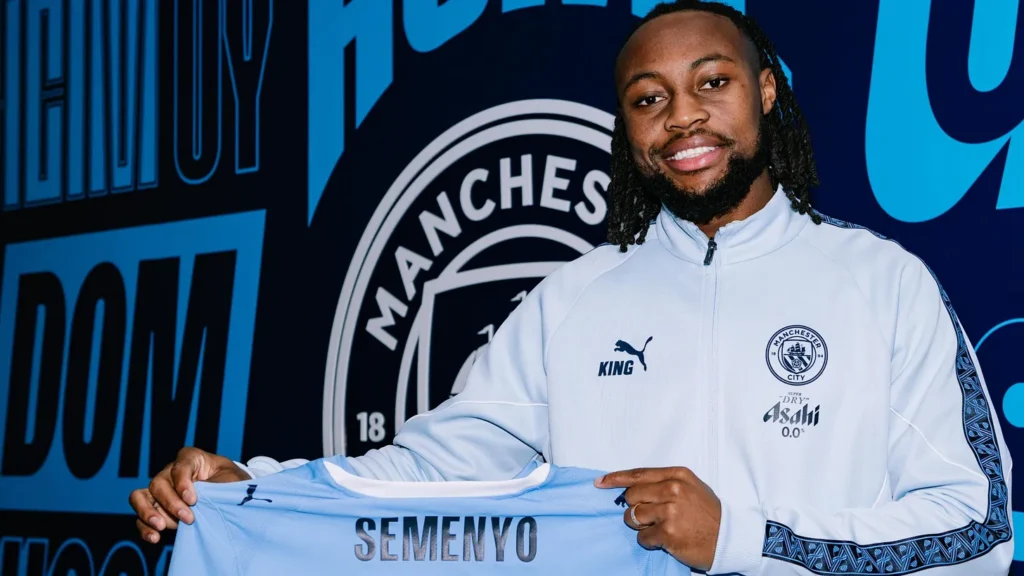
Manchester City have completed the headline move of the January 2026 transfer window so far, signing Antoine Semenyo from AFC Bournemouth for a reported £64 million. The 26 year old has agreed a five and a half year contract at the Etihad, pushing City’s total spend since August 2025 beyond £250 million.
This is not simply another high value addition. Semenyo’s profile addresses a specific tactical need. Capable of operating on either flank or through the middle, he offers pace, physicality, and direct ball progression, traits that have been less prominent in City’s wide options. Prior to the move, he ranked as the Premier League’s third highest scorer, recording 10 goals and 3 assists in 20 appearances for Bournemouth, production achieved in a significantly less dominant attacking environment.
At Manchester City, he entered one of the most competitive attacking rotations in world football. Places in Pep Guardiola’s starting XI are earned rather than given. The key question is not whether Semenyo has the quality to contribute, but how his skill set fits alongside City’s existing wide and attacking options, and which players he directly displaces in the hierarchy.
The Established Starters
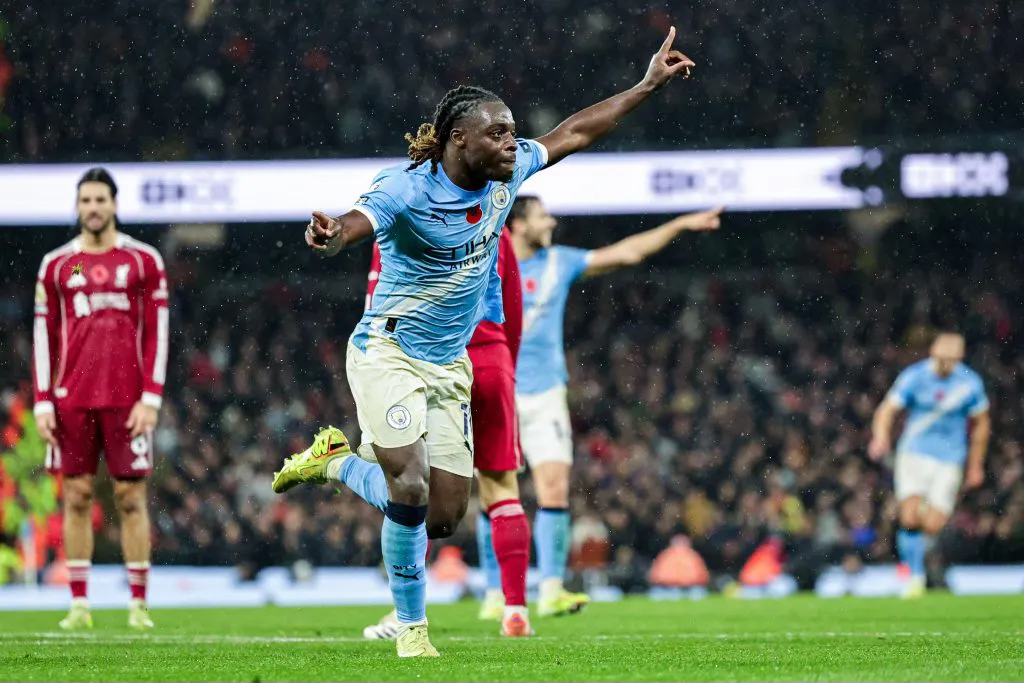
Doku
Jérémy Doku has been one of Manchester City’s more reliable performers this season, particularly in his role as a ball-carrying winger. His pace and dribbling provide consistent penetration from wide areas, allowing City to progress play when possession becomes static.
He has also developed an effective on-field relationship with Erling Haaland, with his ability to stretch defences, which creates space for central runs and finishes. Doku’s comfort on either flank gives Pep Guardiola additional tactical flexibility when adjusting attacking structures.
However, questions remain around his end product. Compared to former City wide players such as Raheem Sterling and Riyad Mahrez, Doku’s goal output has been lower, which continues to shape how his overall contribution is evaluated despite his importance in ball progression and chance creation.
Foden
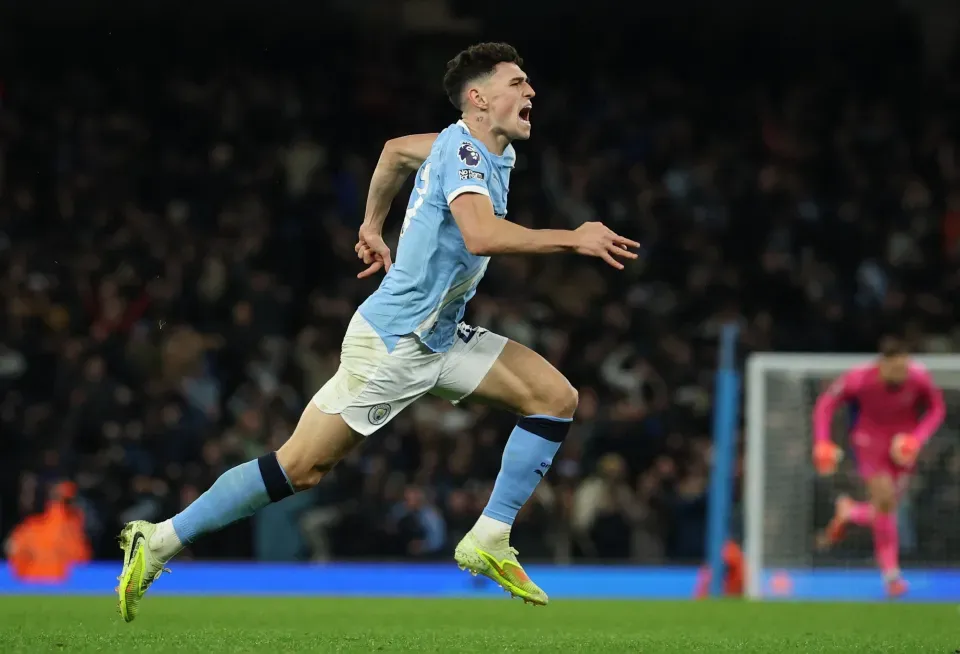
Phil Foden, the 2023/24 PFA Player of the Year, experienced a challenging start to the 2025/26 campaign but has shown signs of recovery. His effectiveness remains greatest in central areas, where his decision making and combination play have the most influence, though he retains the flexibility to operate from wide positions when required.
Following a period of rest and managed rotation, Foden has appeared sharper in recent months. His developing partnership with Rayan Cherki has added control and creativity to City’s central attacking phases, while goals against Leeds United, Crystal Palace, and Sunderland indicate a return to meaningful end product alongside improved overall performance.
Cherki
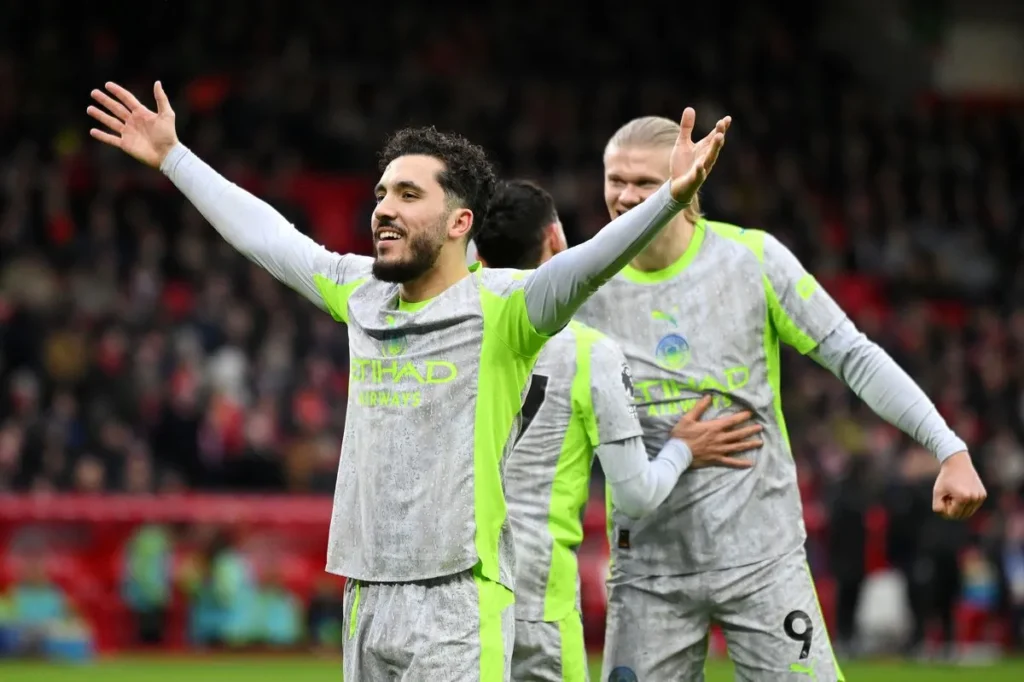
Rayan Cherki’s arrival from Olympique Lyonnais in the summer of 2025 has proven to be great value at £34 million and has been described by Jamie Redknapp as the signing of the season. Cherki made an immediate impact by scoring on his Premier League debut and currently ranks second among the league’s assist providers.
His technical quality has added a different dimension to Manchester City’s attack, particularly in central areas where his combination play has complemented Phil Foden effectively. Cherki’s ability to operate between lines has improved City’s chance creation in tighter spaces, offering an alternative to their more structured buildup patterns.
That creativity comes with an element of risk. Cherki’s preference for unconventional actions can lead to higher variance in possession, a balance that Pep Guardiola has publicly acknowledged, notably following Cherki’s rabona assist to Foden against Leeds United. Overall, his output and influence suggest a player whose rewards currently outweigh the occasional inefficiency.
Savinho
Savinho arrived with significant expectations but has so far struggled to meet them. While there were encouraging signs early in his City career, his performances have lacked consistency, and limited playing time has prevented sustained momentum.
The arrival of Antoine Semenyo increases competition in wide areas and places additional pressure on Savinho’s position in the squad. Despite recently signing a contract extension through 2031, his restricted minutes and modest output suggest he is currently the most vulnerable of City’s wide options in terms of role security.
An injury sustained on New Year’s Day against Sunderland will keep him sidelined until February, further delaying opportunities to reassert himself. In the short term, availability and production remain key challenges as City’s attacking depth continues to increase.
How Semenyo Compares - Goal Contributions
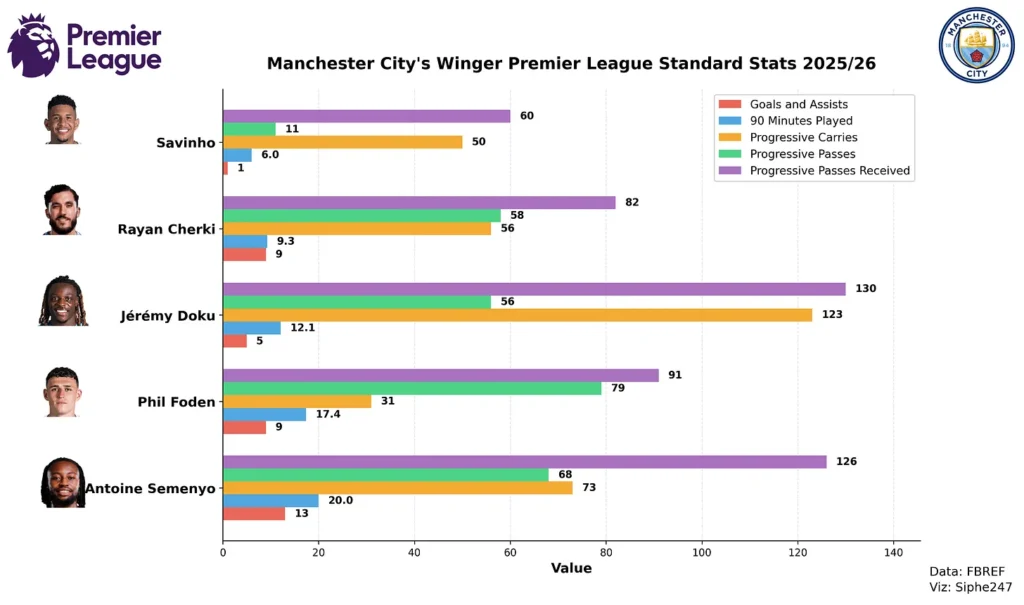
The chart below compares Antoine Semenyo’s Premier League output from this season at Bournemouth with Manchester City’s current wide players during the 2025/26 campaign. The comparison highlights a clear hierarchy within Bournemouth’s attack. Semenyo was not merely a strong contributor within the team structure but the primary attacking reference point, leading key offensive metrics and carrying a disproportionate share of responsibility relative to his teammates.
Antoine Semenyo: 13 goal involvements (10 goals, 3 assists) in 20 full matches (1,800 minutes)
Antoine Semenyo recorded higher attacking output than any of Manchester City’s wingers during the same period. His 13 combined goals and assists came from 20 full matches at Bournemouth, equating to direct involvement in a goal every 1.54 games.
This level of productivity is particularly notable given Bournemouth’s mid table status and comparatively limited chance creation. Semenyo achieved this output without the volume or quality of creative support available at Manchester City. Prior to his January transfer, he ranked as the Premier League’s third highest scorer, a run of form that drew the attention of Pep Guardiola and ultimately prompted City’s move.

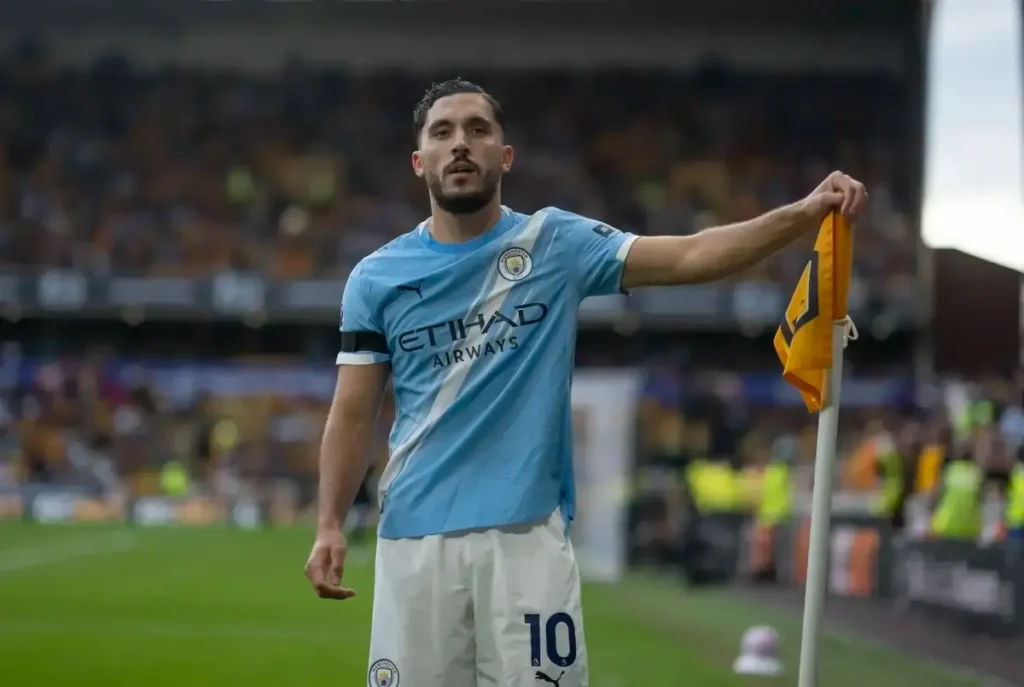
Rayan Cherki: 9 goal involvements in 9.3 full matches.
Rayan Cherki has adapted quickly following his summer move. He has recorded 9 goal involvements from just 9.3 full matches worth of playing time, highlighting a strong impact relative to minutes played.
His efficiency stands out across the league. Cherki currently leads the Premier League in assists per 90 at 0.75, underlining his creative influence when on the pitch. While his total output is lower than some peers, this is largely a function of managed minutes rather than a lack of effectiveness.
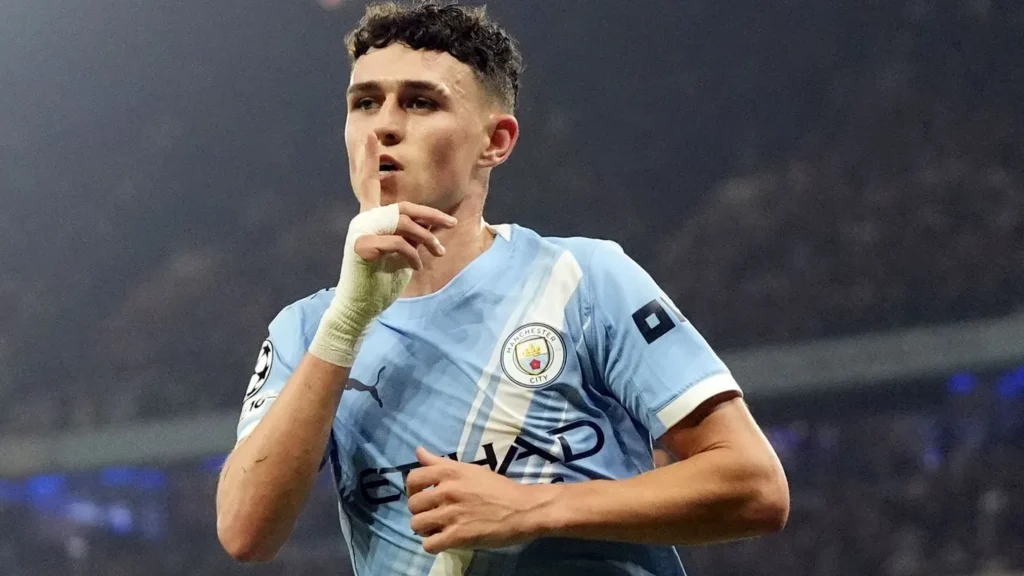
Phil Foden: 9 goal involvements in 17.4 full matches.
Phil Foden has produced 9 goal contributions from 17.4 full matches, indicating a gradual return to form following a difficult start to the 2025/26 season. The underlying trend suggests improvement rather than peak performance at this stage.
Despite that recovery, his output remains lower than Antoine Semenyo’s over the same period, highlighting the contrast in productivity rather than a decline in Foden’s overall influence.
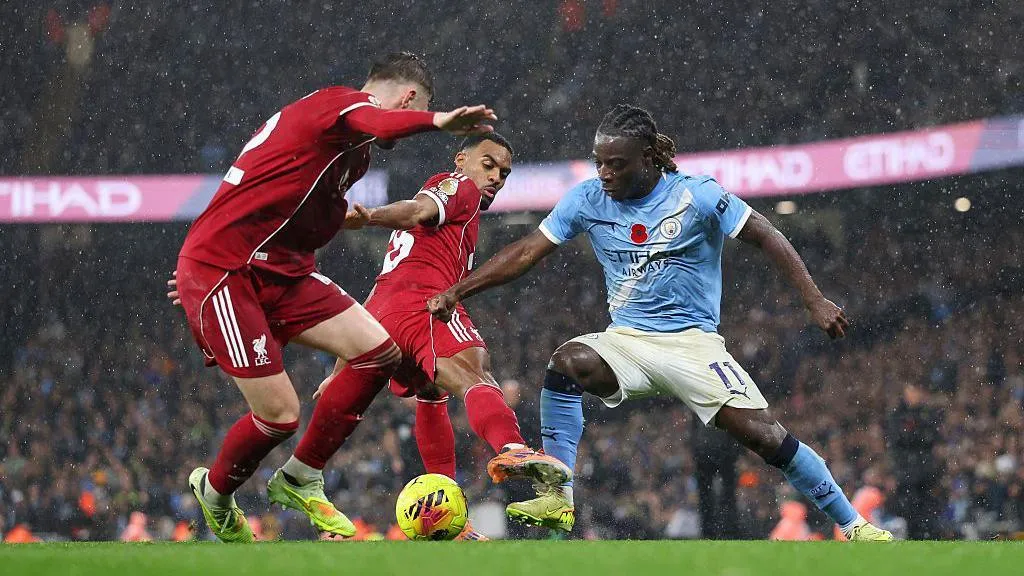
Jérémy Doku: 5 goal involvements in 12.1 full matches
Jérémy Doku’s end product remains a clear point of concern. He has recorded 5 goal contributions from 12.1 full matches, equating to one contribution every 2.42 games. This helps explain the ongoing criticism he has faced despite his strengths in ball carrying and progression.
For a winger at an elite club with sustained attacking dominance, that level of output falls below expectation. The arrival of Antoine Semenyo increases competition directly and places added pressure on Doku to translate his influence in buildup into more consistent final third returns.
Savinho: 1 goal involvement in 6.0 full matches
Savinho’s second season at City has been challenging, and the statistics reflect that. He has recorded just one goal involvement from 6.0 full matches. While there have been brief indications of technical ability, these moments have not yet translated into sustained impact.
An injury sustained on New Year’s Day against Sunderland has further limited his availability, interrupting an adaptation period that was already uneven.
Despite the limited short term output, Manchester City’s decision to extend his contract until 2031 indicates the potential City see in him. The data suggests a player still adjusting to the demands of the Premier League, with development viewed internally as a longer process rather than a finished product.
Sign Up For Our Mailing List
How Semenyo Compares - Progressive Carries
Jérémy Doku remains Manchester City’s primary ball carrier. He leads the Premier League with 123 progressive carries, averaging 10.17 per match, underlining how often City rely on him to advance play when possession becomes static.
He is also a constant outlet. Doku has received 130 progressive passes, comfortably above the league average, reflecting both his off-ball movement and City’s willingness to funnel possession through him in advanced areas.
This profile explains his continued importance despite questions around the end product. Doku’s role is less about finishing attacks and more about moving City into threatening zones. Progression, not production, remains his defining contribution.
Antoine Semenyo combines progression with intelligent positioning. His 73 progressive carries show that he is comfortable advancing play with the ball, though his game relies less on volume dribbling than direct efficiency.
More revealing is his off ball impact. Semenyo has received 126 progressive passes, second only to Jérémy Doku, highlighting his ability to consistently find space in advanced and dangerous areas. This is particularly notable given the context of Bournemouth’s attack. Despite operating in a side with far less creative support, Semenyo still positioned himself to receive the ball in threatening zones more frequently than any current City winger other than Doku.
This combination of movement and progression explains why Semenyo’s output translated so effectively and why his profile fits naturally into a possession dominant side with higher chance volume.
Phil Foden’s lower carrying volume reflects a different function within Manchester City’s attack. With 31 progressive carries, he operates less as a ball carrier and more as a connector, relying on movement and passing rather than direct dribbling to progress play.
His involvement remains significant. Foden has received 91 progressive passes, indicating frequent participation in attacking transitions, often in central or half space positions where he can influence play through combination and decision making. Rather than advancing the ball through individual actions, his value lies in linking phases and unlocking defensive structures once City are already established in advanced areas.
Rayan Cherki shows a balanced progression profile. His 56 progressive carries indicate a willingness to advance play with the ball when space opens, but he is not reliant on sustained dribbling to influence attacks.
With 82 progressive passes received, Cherki is regularly involved in forward phases, often positioning himself between lines where he can combine quickly and exploit tight spaces. His contribution is defined less by volume and more by efficiency, using technical quality and rapid decision making to maintain tempo and continuity in City’s attacking structure.
Savinho’s underlying progression numbers suggest more capability than his output currently reflects. His 50 progressive carries indicate an ability to beat defenders and move the ball into advanced areas, even if those actions have not yet translated into consistent end product.
With 60 progressive passes received, his involvement in City’s attacking phases has been more limited, reflecting both reduced minutes and a less established role within the side.
What the Numbers Actually Mean for City’s Attack?
Viewed collectively, these statistics point to a clear conclusion. Manchester City have recruited a player who was already outperforming their existing wide options while operating in a considerably weaker attacking environment. Semenyo’s output and progression numbers stand up not just in isolation, but also directly against City’s current wingers.
At the same time, the passing and carrying data highlights important distinctions in role. Each player contributes to Guardiola’s system in a different way, whether through ball progression, off ball movement, or combination play. Rather than redundancy, the data suggests complementarity, explaining why Semenyo’s profile adds something new rather than simply replacing an existing option.
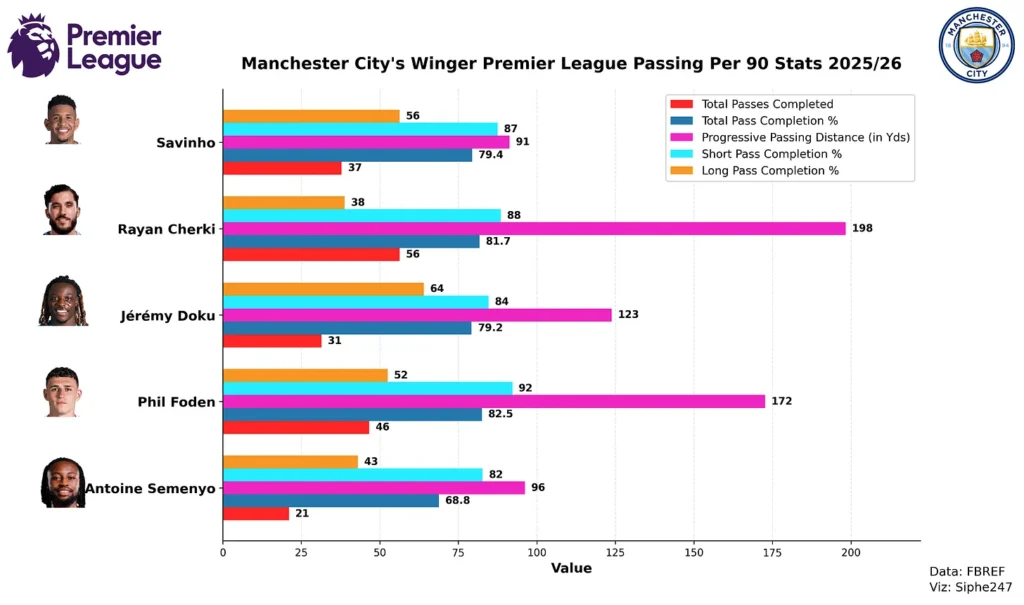
Semenyo vs Doku on the left wing presents the most direct positional competition in Manchester City’s attack, and the passing data provides important context. Jérémy Doku leads in ball progression metrics, recording 123 progressive carries compared to Antoine Semenyo’s 73. He also marginally edges Semenyo in positioning and involvement, with 130 progressive passes received to Semenyo’s 126, as well as a greater progressive passing distance of 123 yards compared to 96.
The contrast becomes sharper in output. Semenyo has produced 13 goal contributions this season, compared to Doku’s 5, a significant gap that reframes the progression data.
Their passing profiles reflect different approaches. Doku completes 31 passes per 90 at 79.2 percent accuracy, indicating a higher involvement role that favours ball circulation and sustained pressure. Semenyo, by contrast, attempts just 21 passes per 90 at 68.8 percent accuracy, reflecting a more vertical and risk tolerant style. Despite this lower volume, Semenyo records higher progressive passing output at 68 compared to Doku’s 56, suggesting that when he does pass, it more often advances play decisively.
The tactical decision for Pep Guardiola is therefore one of emphasis rather than quality. Doku offers consistent ball progression and territorial control through carrying. Semenyo offers a blend of progression and significantly higher end product. In a title race where marginal gains matter, the data supports prioritising the player who converts possession into goals more efficiently, particularly when that efficiency does not come at the expense of progression.
Semenyo vs Foden is not a positional battle but a contrast in function. The passing data makes that clear. Phil Foden averages 46 passes per 90 at an 82.5 percent completion rate, compared to Antoine Semenyo’s 21 passes at 68.8 percent. Foden operates as a possession controller, sustaining tempo and circulation, while Semenyo’s game is defined by directness and vertical intent.
Foden’s playmaking role is reinforced by his superior progressive passing output, with 79 progressive passes compared to Semenyo’s 68, alongside significantly higher volume. He is second out of all City’s wingers in progressive passing distance at 172 yards, highlighting his influence in earlier phases of buildup. Semenyo’s lower figure of 96 yards reflects a player operating higher up the pitch, closer to goal.
The threat profiles further underline their separation. Semenyo leads in goal contributions at 13 compared to Foden’s 9 and records more than double the number of progressive carries, 73 versus 31, illustrating his role as the primary ball advancing and finishing threat.
Rather than competing for the same space, the data suggests clear complementarity. In matches where control is required, Pep Guardiola is more likely to deploy them together, with Foden dictating rhythm and chance creation while Semenyo provides penetration and end product in the final third.
Semenyo vs Cherki is a comparison of function rather than competition. Rayan Cherki operates primarily in central zones, averaging 56 passes per 90 at an 81.7 percent completion rate, reflecting heavy involvement in buildup phases. His progressive passing distance of 198 yards, the highest among City’s wide and attacking options, indicates frequent drops into deeper areas to collect and distribute possession.
Antoine Semenyo, by contrast, plays much higher up the pitch. His lower passing volume of 21 passes per 90 and shorter progressive passing distance of 96 yards point to a role focused on final third actions rather than buildup control. This advanced positioning also aligns with a higher risk tolerance in possession.
The data shows limited functional overlap. Cherki functions as a deep lying creator who can drift wide to link play, while Semenyo operates as a wide forward whose primary responsibility is attacking space and finishing moves. From a tactical perspective, their profiles are complementary rather than conflicting, allowing them to coexist within the same attacking structure.
Savinho remains a developmental profile, and the passing data helps explain both his current limitations and Manchester City’s patience. He averages 37 passes per 90 at a 79.4 percent completion rate, indicating technical security in possession, but his output of just 11 progressive passes shows that this involvement is not yet translating into meaningful attacking impact.
His progressive passing distance of 91 yards suggests reasonable positioning within City’s structure, but without sufficient volume, those touches have yet to consistently unsettle opposition defences. This aligns with his limited end product and reduced influence in final third phases.
Antoine Semenyo offers a useful point of comparison. Semenyo combines lower passing volume at 21 per 90 with high progression and output, recording 68 progressive passes and 13 goal contributions.
At 20 years old and under contract until 2031, Savinho remains a long term project. The gap between his current metrics and Semenyo’s is substantial, but player development is rarely linear, and City’s approach reflects an investment in future growth rather than immediate returns.
The Verdict: A Data-Driven Masterstroke
The data supports a clear conclusion. Antoine Semenyo was not simply effective at Bournemouth. He was outperforming the majority of Manchester City’s attacking options during the 2025/26 season. His 13 goal contributions from 20 full matches represent elite productivity, particularly when viewed alongside his progression metrics. Semenyo ranks second among City’s wide options for progressive passes received with 126, behind only Jérémy Doku, and second for progressive passes completed with 68, behind Phil Foden. This combination indicates both advanced positioning and creative contribution, reinforcing his profile as a complete attacking threat rather than a single dimension finisher.
His early performances for Manchester City have aligned with those indicators. On debut he was named man of the match after scoring and assisting in a 10-1 FA Cup win over Exeter City, followed by a goal in City’s 2-0 victory against Newcastle United in the first leg of the Carabao Cup semi final. These returns suggest a smooth translation.
At £64 million, a fee set by his release clause, the investment is already showing justification. More importantly, Semenyo’s arrival expands the range of tactical options available to Pep Guardiola, adding further complexity to selection decisions and rotation patterns.
Sign Up For Our Mailing List
Disclaimer: Data analysis isn’t about capturing every detail—it’s about uncovering meaningful patterns from what’s available. The data used in this study is both robust and thoughtfully selected, offering a reliable foundation for insight. While no dataset is ever truly exhaustive, we aim to be honest and provide insightful interpretation.