What is a "Unicorn" Forward?
The “Unicorn” is a forward player who contributes to their team’s attacking threat through a combination of dribbling, shooting and passing. Their ability to impact the game in multiple ways makes them difficult to contain, as defenders can’t easily anticipate where the danger will come from. This idea is illustrated in “How to Win The Premier League” by Ian Graham, where he discusses this notion with regards to the dominant Liverpool front three of Mane, Salah and Firmino.
“The idea of usage led us to question whether attackers were adding value by using up possessions or by keeping them going. Our favourite type of striker was the ‘triple threat’ – a player who could add through shooting, passing, and dribbling… At Liverpool we had the luxury of three triple threats in Robert Firmino, Sadio Mane, and Mo Salah… Separating players’ contributions into different types of actions allowed us to begin to understand teamwork. ”
Adding value through shooting is the easiest to grasp. It’s about consistently taking high-quality shots that enhance a team’s goal-scoring potential.
Creating value by passing can take several forms. The most direct is by creating chances – i.e. passes that lead directly to shots. However, passes that move the ball into advanced areas or destabilize defensive shapes are equally important because they lay the groundwork for attacks and help a team control territory.
Carrying the ball effectively can be valuable in multiple ways. Whether it’s a direct dribble that opens up a shooting chance – by drawing defenders and creating space for teammates, drawing fouls in a dangerous position, or simply maintaining control under pressure to avoid losing possession. These actions aid in shifting momentum and stretch defences.
How Can We Measure These Threats?
Among the three attacking threats, shooting ability is arguably the easiest to quantify. Two metrics stand out for measuring this:
- Shot Volume – number of shots taken.
- Non-Penalty Expected Goals (npxG) – expected goal excluding penalties.
Evaluating passing ability requires looking at a combination of metrics that capture both creativity and progression. The metrics used are:
- Expected Assists (xA) – measures how likely a pass leads to a goal.
- Non-Penalty Expected Goals (npxG) – expected goal excluding penalties.
- Expected Assisted Goals (xAG) – measures the quality of chances generated from a player’s passes.
- Key Passes – measures passes that creates dangerous situations.
- Passes into the Penalty Area – measures passes that creates dangerous situations.
- Progressive Passes – measures a player’s ability to advance possession into threatening areas.
- Passes into the Final Third – measures a player’s ability to advance possession into threatening areas.
Carrying ability is arguably the most complex of the three attacking threats to evaluate but its impact is undeniable. The metrics we have used to capture this ability are:
Carries into the Penalty Area – measures a player’s ability to drive the ball into the most dangerous zone.
- Touches in the Penalty Area – measures dangerous situations.
- Successful Take-Ons – measures a player’s ability to beat an opponent 1v1.
- Progressive Carries – measures a player’s ability to move the ball upfield through dribbling.
- Carries into the Final Third – measures a player’s ability to move the ball upfield through dribbling.
It’s clear to see, metrics that capture the ability to draw fouls and retain possession under pressure are difficult to measure. We feel this is an area of limitation in our analysis.
To assess each player’s proficiency across the three attacking threats, a weighting method is used. Simply put, rather than using equal weights for all metrics in each ability, instead greater weights are assigned to metrics that we believe have greater value. For example, In passing ability, xAG has a higher weighting than passes into the final third.
We used a percentile ranking of the metrics mentioned above. Below is a breakdown of the top five forwards for each of the composite threat percentile and an overall percentile.
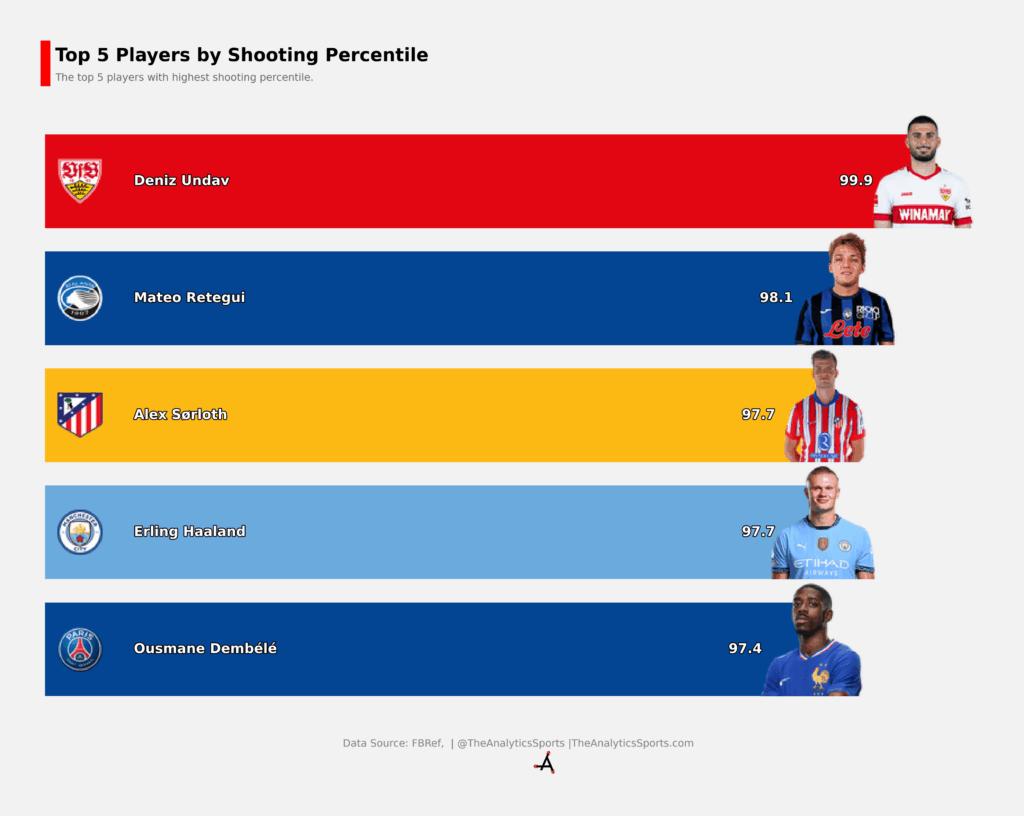
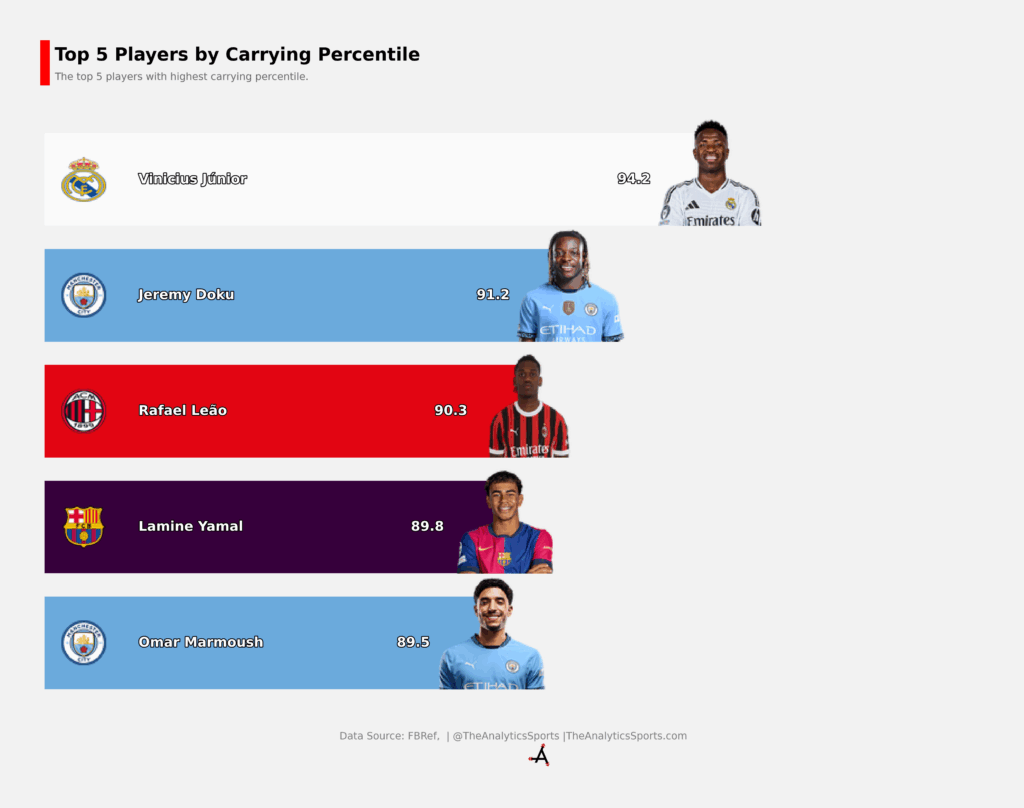
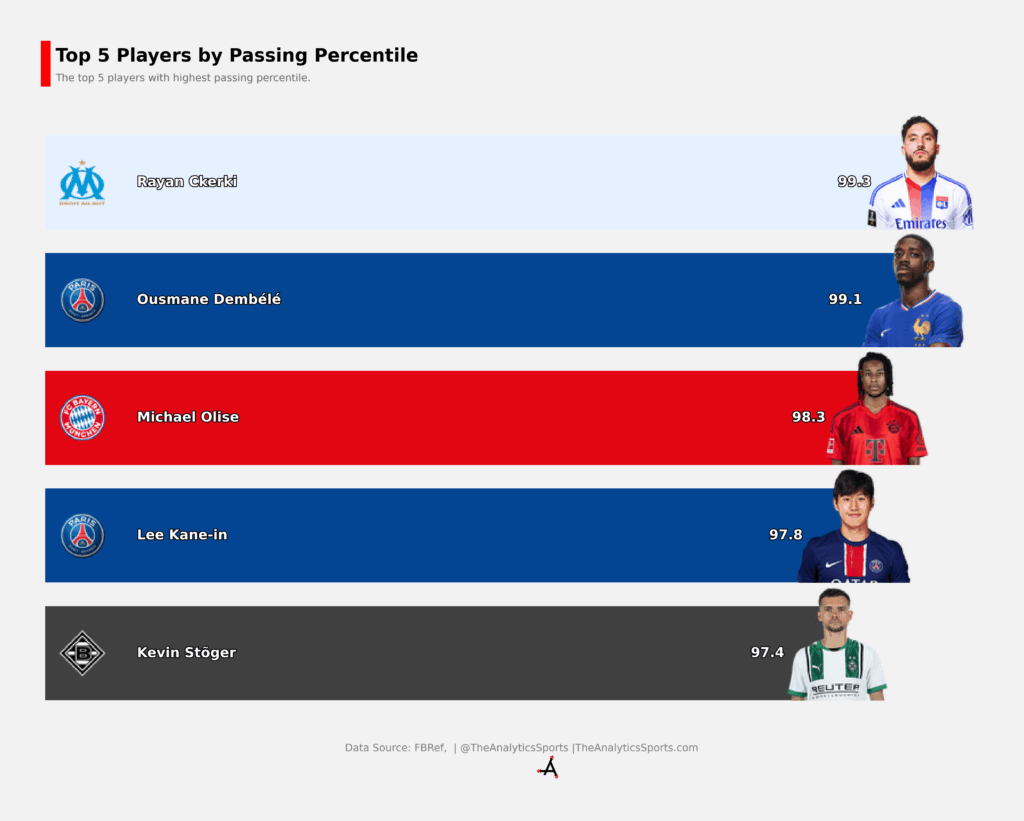
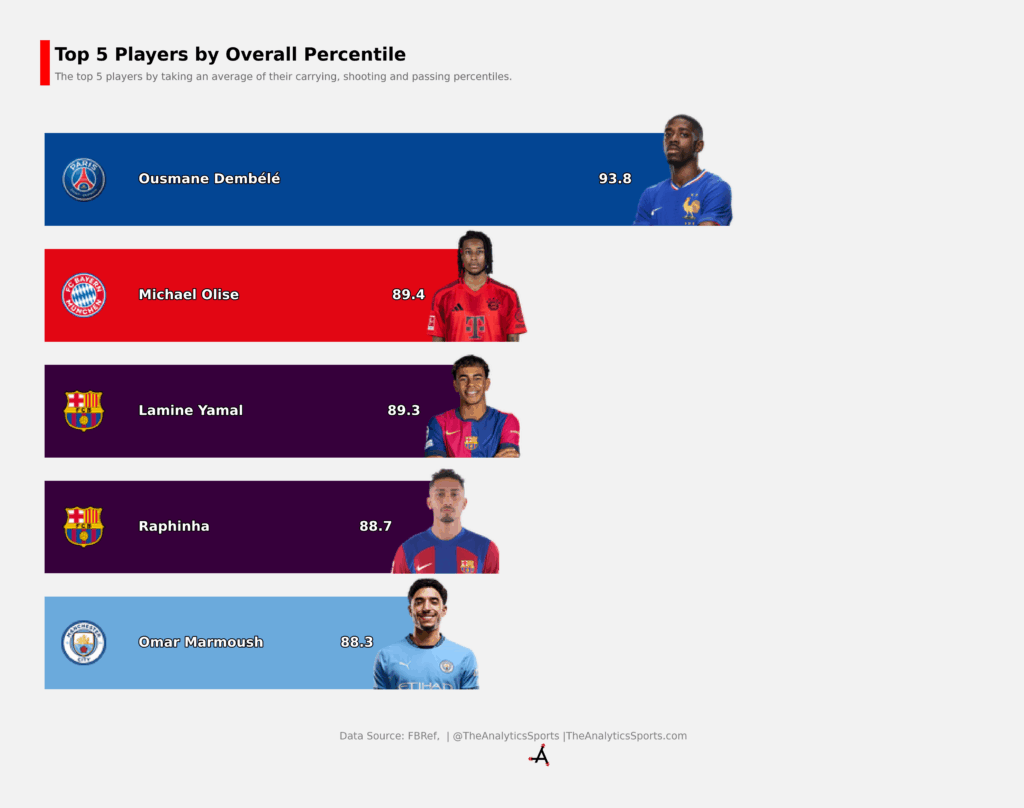
The Search
To identify the “Unicorn” forward, we used a K-means clustering algorithm based on their percentiles across the three attacking threats. This approach lets the data speak for itself, grouping players with similar styles and impact levels. For example, players who rank highly in all three areas form the “Unicorn” group, while others who shine in passing but score lower in other metrics fall into a different cluster. The method is blind to reputation or preconceived ideas.
The Clusters
Take a look at the 3D scatter plot below, it groups forwards based on their percentile score in shooting, passing, and carrying. Each dot is a player, positioned according to their performance in these three categories.The red X’s mark the centres of six distinct clusters, each reflecting a unique player’s profile.
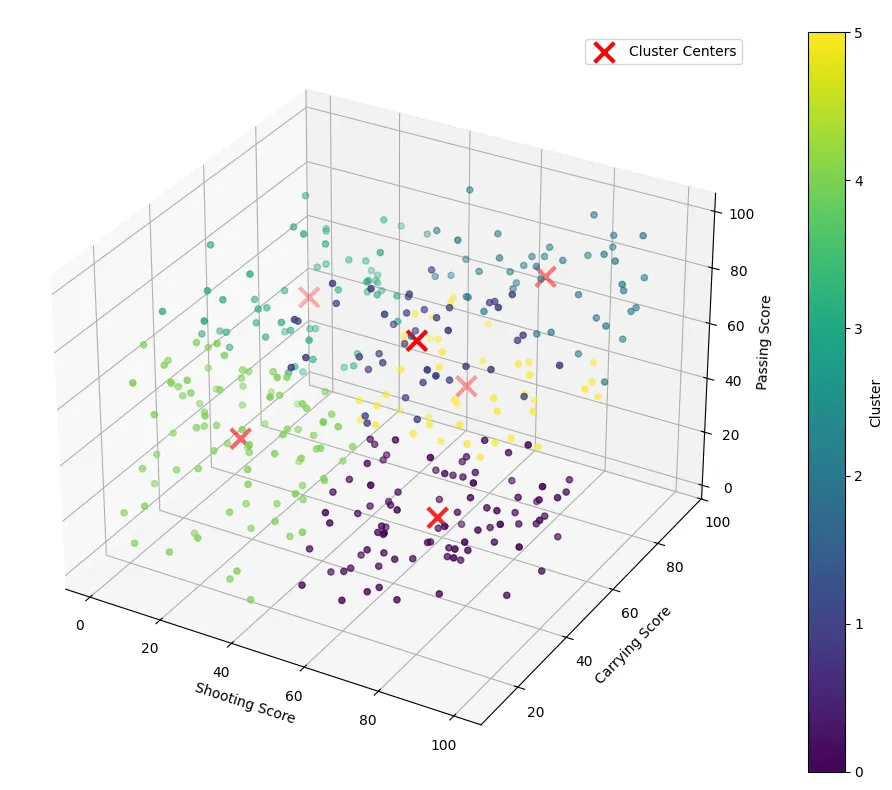
Let’s dive into these clusters and see who landed where. You’ll notice some patterns that align with what we see on the pitch, while others may challenge assumptions and offer new insights into players we thought we understood.
Sign Up For Our Mailing List
The Bagsman - Strong Shooting

This group features players who stand out for their shooting ability, while contributing less through passing and carrying. Notable names include Robert Lewandowski, Erling Haaland, Dominic Solanke, and Moise Kean. This cluster is easy to interpret, as these players are classic centre-forwards, positioned close to goal and focused primarily on finishing chances.
This is the largest cluster with 88 players. A couple of names might raise eyebrows such as Nicolas Jackson and Darwin Nunez. Both have solid carrying numbers – in the low 60th percentile – which could suggest a better fit in a more well-rounded group but their high-end shooting scores in the 94th and 84th percentile pulled them into this specialist group. An indication of how clustering reveals dominant traits, even in players with broader skill sets.
The Composer - Strong Passing & Shooting

The first of the “double-threat” profiles, players who excel in both shooting and passing. These are typically forwards who contribute as creators and finishers, often dropping deeper to link play rather than sitting on the last line of defence. It’s a skillset common among central players rather than wide players, so it’s no surprise that traditional wingers are largely absent from this group.
Despite being the smallest cluster, with just 42 players, it includes high-profile names, Harry Kane, Paulo Dybala, Bruno Fernandes, Eberechi Eze and Phil Foden. Foden’s appearance might catch you off guard as he is known for his dribbling and close control, as such you’d expect his dribbling metric to stand out yet he is only in the 53rd percentile for carrying. The first instance of data challenging a widely held belief in football, from our analysis.
Antonie Griezmann is another fascinating inclusion. Intuitively, he fits the mould – intelligent movement, creative passing, and technical quality – but his shooting score is low, in the 38th percentile with passing in the 87th percentile and carrying in the 33th percentile. Perhaps, this is the best fit given his current profile.
The Ankle Breaker - Strong Passing & Carrying
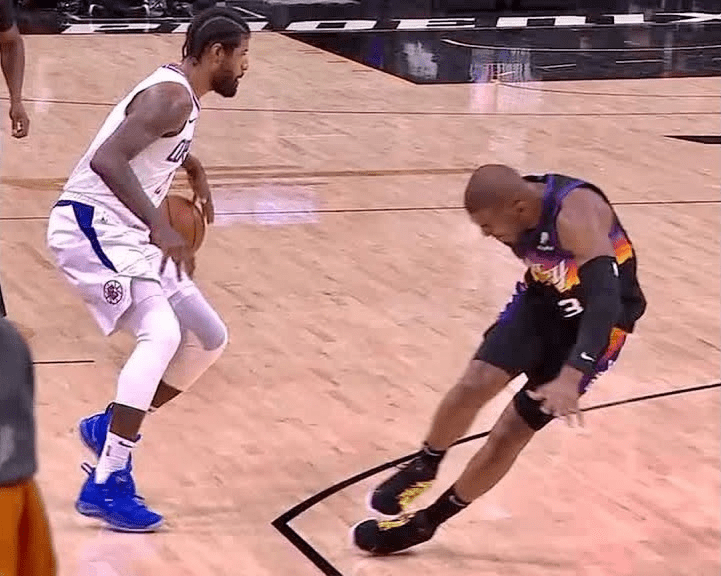
This group represents forwards who thrive through a blend of passing and dribbling, often combining both in a single attacking move. Think of players who link play, beat defenders, and create chances but rarely take the shot themselves. Bukayo Saka feels like a natural fit here, but his strong shooting numbers excludes him from this cluster.
Names like Jadon Sancho, Dejan Kulusevski, Jeremy Doku, Takefusa Kubo, Morgan Rogers, Bernardo Silva, Dwight McNeil all validate the cluster. These players tend to fit one of two moulds, creative midfields operating out wide or dribble-heavy attackers who lack end-product in front of goal.
Interestingly, there isn’t a single traditional central striker in this cluster. Perhaps the most surprising name is Bryan Mbeumo – often viewed as a reliable finisher but with shooting in the 37th percentile, it’s clear his threat can be attributed to his clinical finishing rather than frequent or high-quality shot generation.
The Blade Runner - Strong Carrying & Shooting

This group features the forwards who shine when carrying the ball and creating shooting chances – this profile fits the inside forward. Players like Alexander Isak, Dango Ouattara, Mohammed Kudus, Brennan Johnson, Gabriel Martinelli, and Alejandro Garnacho feel right at home here.
A surprise inclusion is Alexander Isak, but with passing in the 58th percentile, this wasn’t quite high enough for entry to the unicorns. Most of the names here are wide players or hybrid attackers who make a habit of cutting inside and driving at defences, combining dribbling with a real goal threat.
The Unicorns - Triple Threat

Here they are – The unicorns, we’ve been searching for the true triple threats. This cluster includes all players in our earlier graph – Top 5 Players of Overall Percentile. Bukayo Saka, Mohamed Salah, and Kylian Mbappe are also included, which speaks to the quality of the unicorns. An interesting observation from this cluster is the dominance of wingers.
There are a few surprises too. Yankuba Minteh and Nico Williams both made the cut despite having only average shooting scores, 45th and 46th percentile. But their strong passing and carrying numbers pulled them into this elite circle, reflecting just how well-rounded their overall profiles are.
The Void - Strong in Nothing

Arguably our favourite cluster, this one is for the forwards who haven’t particularly excelled in any area. It’s not the most flattering group but it tells its own story. Among the more recognisable names we have Rasmus Hojlund, Marcus Rashford, Jordan Ayew, John McGinn and Jack Harrison.
Most of these players had a poor season or played in struggling attacking systems. Honestly, seeing two Manchester United forwards here immediately reassured us that the clustering was working exactly as intended.
One thing that stood out was the absence of carrying or passing specialists. Passing only forwards, we believe, is non-existent because as a forward, if passing is your strength, then you need to be good enough in other areas to justify your advanced role.
Likewise, the omission of a carrying-only cluster is more intriguing but once given more thought, its exclusion is understandable. Dribbling without any effective end-product doesn’t offer much value. Carrying is a complementary threat, useful when paired with passing or shooting but insufficient on its own.
Sign Up For Our Mailing List
Disclaimer: Data analysis isn’t about capturing every detail—it’s about uncovering meaningful patterns from what’s available. The data used in this study is both robust and thoughtfully selected, offering a reliable foundation for insight. While no dataset is ever truly exhaustive, we aim to be honest and provide insightful interpretation.